When Queen Emma Bridge opens for marine traffic, free ferries carry pedestrians between Punda and Otrobanda. If the opening is brief, waiting may be quicker. There is no useful fixed tourist timetable: the bridge opens when harbour traffic requires it.
Why is Queen Emma Bridge so special?
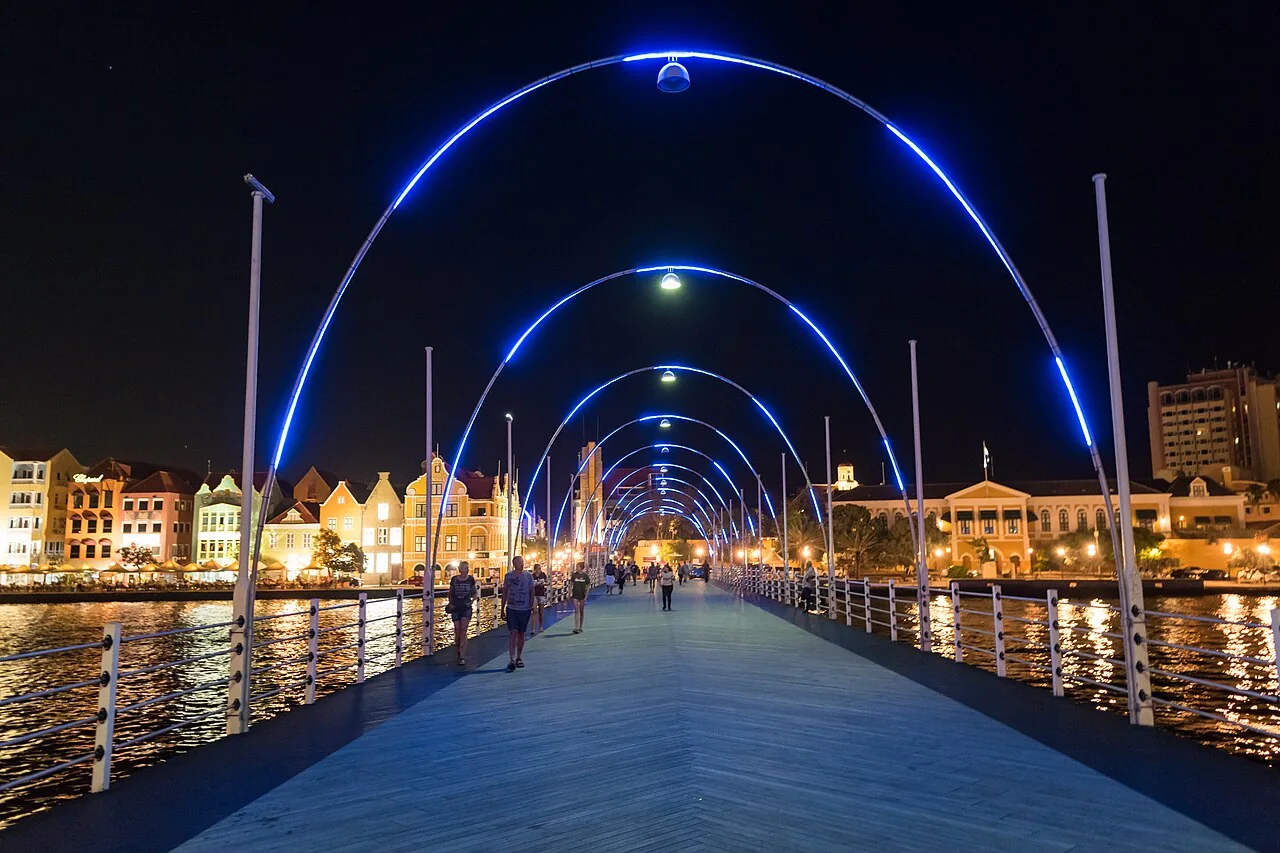
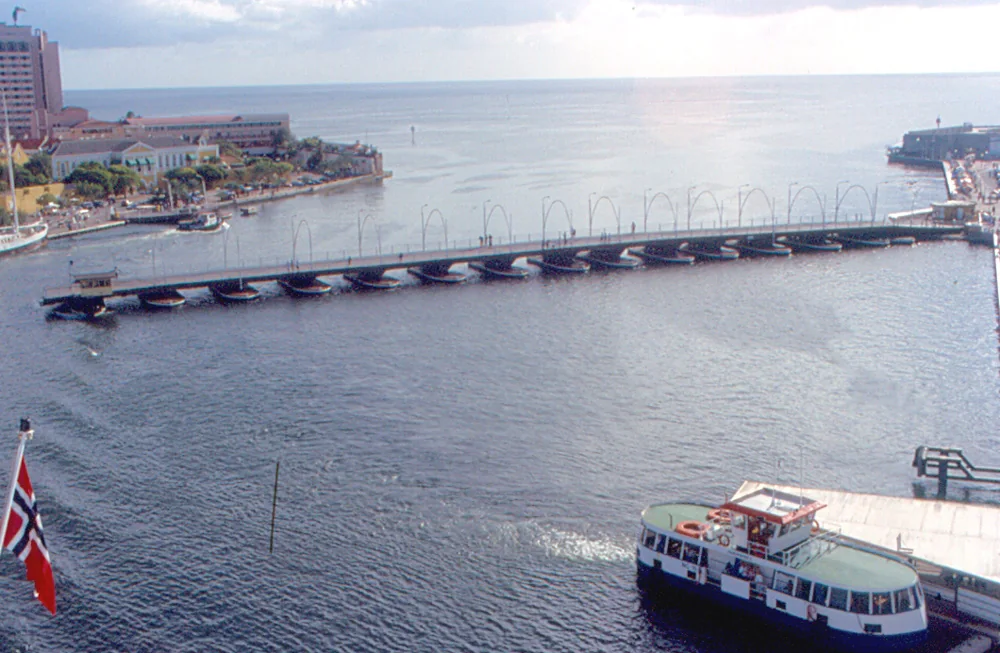
Queen Emma Bridge is a floating pontoon bridge across St. Anna Bay. It opened in 1888 and has become one of Willemstad’s defining landmarks. The pedestrian bridge is about 170 metres long and is carried by 16 pontoons.
The experience is not just the view. When a vessel needs to enter or leave the natural harbour, the bridge swings aside. Curaçao Ports Authority manages both the bridge and the ferries and states that the bridge can open day or night for vessel movements, so you cannot reliably plan around a fixed opening schedule.
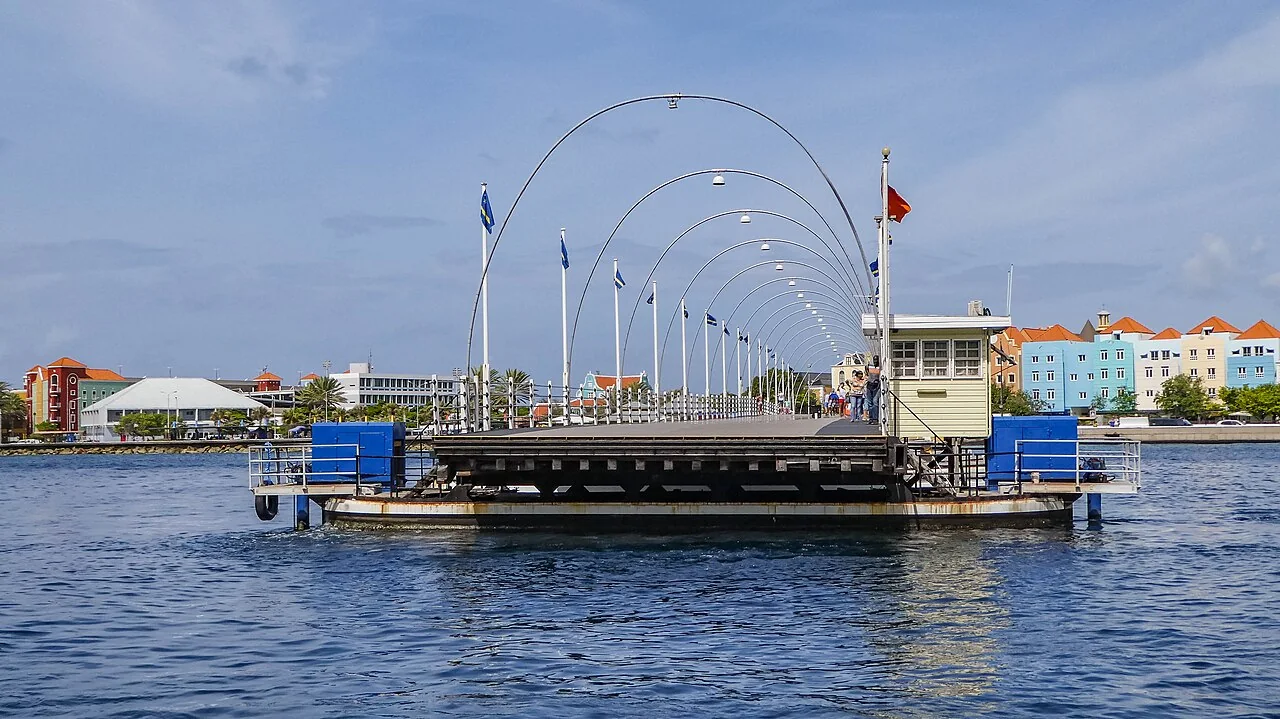
What happens when the bridge opens?
Short opening
If the bridge is only open briefly, waiting at the waterfront is often easiest. You can usually see when it starts swinging back into place.
Need to cross now
If you need the other side while the bridge is open, follow the waterfront signs or staff instructions. A free ferry carries pedestrians between Punda and Otrobanda.
How does the free ferry work?
You do not need to buy a ticket. The ferries form part of the pedestrian connection between the two districts and are used when the bridge is open for marine traffic. Give yourself some flexibility because the operation follows ship movements rather than a tourist timetable.
Practical tip: if you have a restaurant reservation, tour or taxi on the other side, leave ten to fifteen minutes earlier than the absolute minimum. Most crossings are straightforward, but an unexpected bridge opening is annoying when your schedule is tight.